An Alameda Garden

Wednesday, May 08, 2013

Butterflies & Blooms at the SF Conservatory of Flowers

A new exhibit opens today at the San Francisco Conservatory of Flowers celebrating one of the most fascinating of all the insects--butterflies.

From now until October 20, you'll be able to wander amongst more than 20 species of North American butterflies as they flit from flower to flower, sipping nectar and doing their all-important pollination work. Among the species represented are monarchs, Western swallowtails, and red admirals as well as a number of giant moths.

In addition, visitors will be able to observe the butterflies' chrysalises in the Butterfly Bungalow and perhaps even be present to witness a butterfly's emergence into the world.

I'm looking forward to seeing this exhibit and you can see it too, Tuesdays through Sundays from 10 to 4. Check the Conservatory's website for admission prices and directions.
Photo Credits: Ron Lewis


Monday, May 06, 2013

Dahlias: You Can Grow That!

I may be wrong, but I honestly think the hardest part of growing dahlias is picking which stunning varieties you want to grow out of the hundreds available. Every year I've gone to the San Francisco Flower and Garden Show and looked at the vendor booths selling dahlias, intending to buy but ultimately being overwhelmed by the incredible selection. Every year I left without making a purchase. This year, however, was different. I stopped by the booth for Elkhorn Garden and while I stood there dazed before the photos of all the gorgeous blooms, the exhibitor started chatting with me and before I knew it he had walked me through some options and helped me pick out four varieties.

I'll be planting my dahlias this week and here's how it will go. I'm planting them in a bed in my front yard where they'll get full sun. Before planting, I'm going to add some compost and work it into the soil. The tubers don't need to be planted very deep--only about three inches below the soil line--but it's important that the "eyes" of the tuber (where the sprouts will grow from) are facing up. Not every tuber has eyes, or eyes that are easy to spot, anyway. A couple of my tubers have already started to sprout but on the other two, I can't see any eyes. I'm planting them anyway and I'll wait to see if anything sprouts. I'll add a small stake next to each tuber with a label with the cultivar name. Dahlias don't need frequent watering until they start to bloom; then Elkhorn recommends soaking them about every 10 days. Avoid high-nitrogen fertilizers, which will encourage too much green growth. The dahlias should bloom throughout the summer and into fall, until there is a frost.


One of the great things about gardening in a mild climate with sandy soil is that you don't have to go through the tedious process of digging up dahlia tubers each autumn, storing them through the winter, and replanting them in the spring. Because we don't have hard freezes here in the Bay Area, and because the soil drains quickly enough that the tubers aren't likely to rot, I can leave these dahlias in the ground. In a few years I'll need to dig them up and divide them. But until then, they can stay put and it will be one less thing to worry about getting in the ground in the spring. And the guy from Elkhorn Garden gave me a great tip: At the end of the season when I cut the spent bush down to the ground, he recommended leaving a stub of a stem a couple inches above the soil line, then covering it with an overturned pot or saucer. That will prevent rainwater from accumulating in the hollow stem and rotting the tuber, and will also serve as a plant marker so I know to plant around where the dahlia will come back the following spring.


Friday, May 03, 2013

The Bay Area's Largest Plant Sale

Photo Credit: James Gaither
The San Francisco Botanical Garden is holding its huge annual plant sale tomorrow and it seems like they will have something for everyone, or at least something for everyone's garden. Over 20,000 plants will be for sale representing over 2500 varieties, including some hard-to-find special treats. Here are some of the highlights you can expect to find:
  • Several kinds of South African restios, including the very hard to germinate Cannomois virgata, a lovely, tall, reed-like plant.
  • A gorgeous selection of tropical vireya rhododendrons. SFBG is one of only a few nurseries that grow them.
  • Many rare hellebores, including Helleborus foetidus, a hard to find winter blooming evergreen.
  • 250 kinds of native plants, including Matilija poppies, native irises, up to 20 kinds of Ceanothus (wild lilac), and more.
  • Unusual perennial vegetable starts from the Andes, including oca and yacón.
  • Lots of stunning, flowering shrubs, including species of Leucadendron, whose cut flowers can cost anywhere from $7-10 each.
The sale takes place tomorrow, Saturday, May 4 from 10am-2pm at the SF County Fair Building at San Francisco Botanical Garden, located in Golden Gate Park at 9th Ave at Lincoln Way. For more information, visit www.sfbotanicalgarden.org or call (415) 661-1316.

Tuesday, April 23, 2013

Monday, April 22, 2013

Happy Earth Day to You!

Photo credit: Stock.xchng
Some 43 years after the very first Earth Day, the message should by now be quite plain: Tread lightly. This is the only planet we have.

Sunday, April 14, 2013

All the Dirt on Greensand

I have an article up on SFGate.com today discussing greensand as a soil amendment. Greensand improves the structure of your soil and delivers a longer-lasting benefit than most fertilizers. If you think your soil could use a boost, check it out.


Wednesday, April 10, 2013

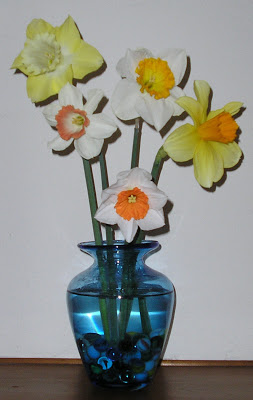
How to Handle Daffodil Bud Blast

First, you cry.

You've waited through months of cold and rain with one thought in your mind: there will be daffodils. Eventually. There will be daffodils. And then, finally, there are daffodils. A few. But what there are a whole lot of are leaves and stems topped by brown, papery, dead-looking buds that never open.

You've just been bud-blasted.

It happened to me this year. And I was so ashamed! I thought I must have done something wrong. Most of my daffs have been in the ground for several years and aside from dutifully letting the leaves die down after blooming before I clear them away, I haven't done anything with them. I've added some compost now and then, but no special soil amendments. So I figured my neglect was probably the cause of these dead-on-arrival buds.

But after a bit of research, I've found that there could be some other reasons why my daffs suffered this fate. According to the American Daffodil Society, while lack of feeding may be to blame, other possibilities are not enough sun (they need at least a half-day of sun to set a bloom), unusual weather (heat waves or excessive rain) the previous spring when the bulb would have been forming the next flower, or a need to divide the bulbs if they've been in the same place for more than a few years. There are other possible causes having to do with planting or even viruses, but they don't seem to apply to my particular bulb problem.

So here's my plan for beating bulb blast next year:
  1. I'm applying a low-nitrogen, high-phosphorus and potassium fertilizer now, while the bulb is getting ready to produce the bloom for next year. (The ADS recommends a 5-10-10 fertilizer.)
  2. I'm leaving the leaves and stems in place until they die back naturally. I usually tie them into bundles with string or rafia to keep them tidier and to keep me from yanking them out when I'm weeding.
  3. After the greens have died back completely I'm going to dig up ALL the bulbs and check them for signs of disease or decomp. Any mushy bulbs will get tossed. I'll divide the bulbs as needed and store them until the fall somewhere cool and dry. (I keep those plastic mesh bags that onions and other vegetables are sometimes sold in in the stores for just this purpose. They keep the bulbs together but still allow air circulation around them.)
  4. In the fall, I'll replant the bulbs in a different part of my garden where they're going to get better sun exposure. The bed that I had them in is now more shaded by a growing tree than it used to be. I'll feed them again at the time of planting.
With any luck, next year I'll be rewarded with the full range of daffodil blooms I've enjoyed in the past.


Related Posts Plugin for WordPress, Blogger...