I don't think the local farmers or grocers need to worry about competition from my little garden, but this morning I had my breakfast yogurt topped with a few strawberries from the new Ogallalla strawberry plants I got from Gurney's this year, and it was sweet. Actually, the experience of growing the berries may have been sweeter than the eating, which led me to do a mid-season review of whatever edibles I'm growing right now.
Strawberries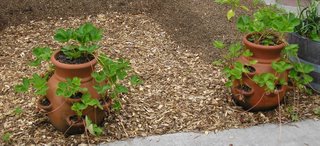
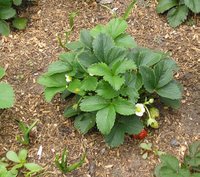 With somewhere between 60 and 70 everbearing strawberry plants now, I would have expected to have a bit heavier and a bit more consistent harvest. But so far the strawberries are trickling in. The Ogallalla berries, which are in two strawberry pots, are the only ones that have ripened so far and overall, they are not nearly as sweet and not even as big as the Quinault. The Quinault, however, have been very slow to come in. Usually, I can start picking berries in March, but there are only two Quinault berries that are even close to ripening. I think the spring rains and my overhaul last month of the strawberry bed has slowed them down, but I'm hoping they'll kick in soon.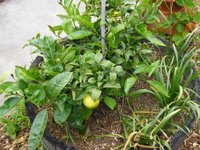
Citrus
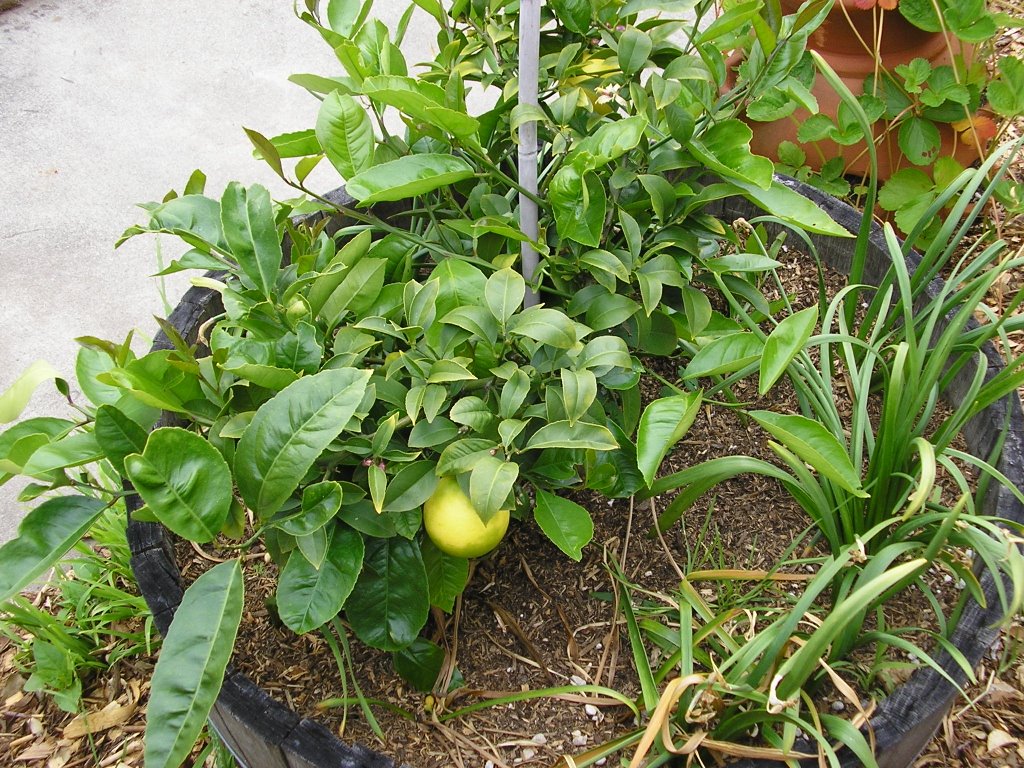
My dwarf Meyer Lemon tree has only a couple not-quite-ripe lemons on it right now, but quite a few buds, so I'm hoping that it will continue to produce well (given its size). I'm considering getting a couple more citrus trees (perhaps a ruby red grapefruit and either a navel orange or a Satsumi tangerine) this fall to espalier along the fence in between the roses.
 Berry
Berry
The mystery berry (raspberry? blackberry? black raspberry?) I found growing under the delphinium and moved to the new compost bed is doing OK, but I've decided to move it to a pot. For one thing, that will enable me to re-locate it to an area that gets sun all day. Also, since I plan on reworking the area where the compost beds are in the fall, I'd have to move them sooner or later anyway. I found a good, deep redwood pot yesterday and weird but interesting and functional metal store display thingie that will work well as a trellis. I hope to get it repotted in the next few days.

 Herbs
Herbs
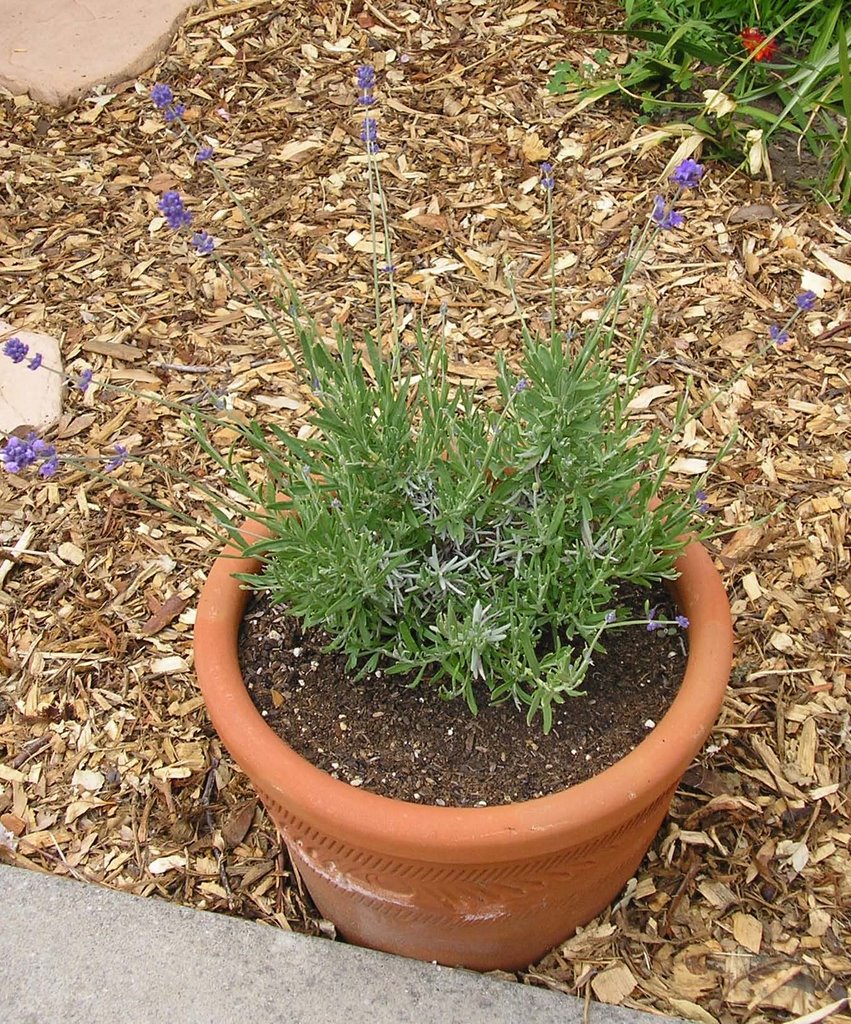
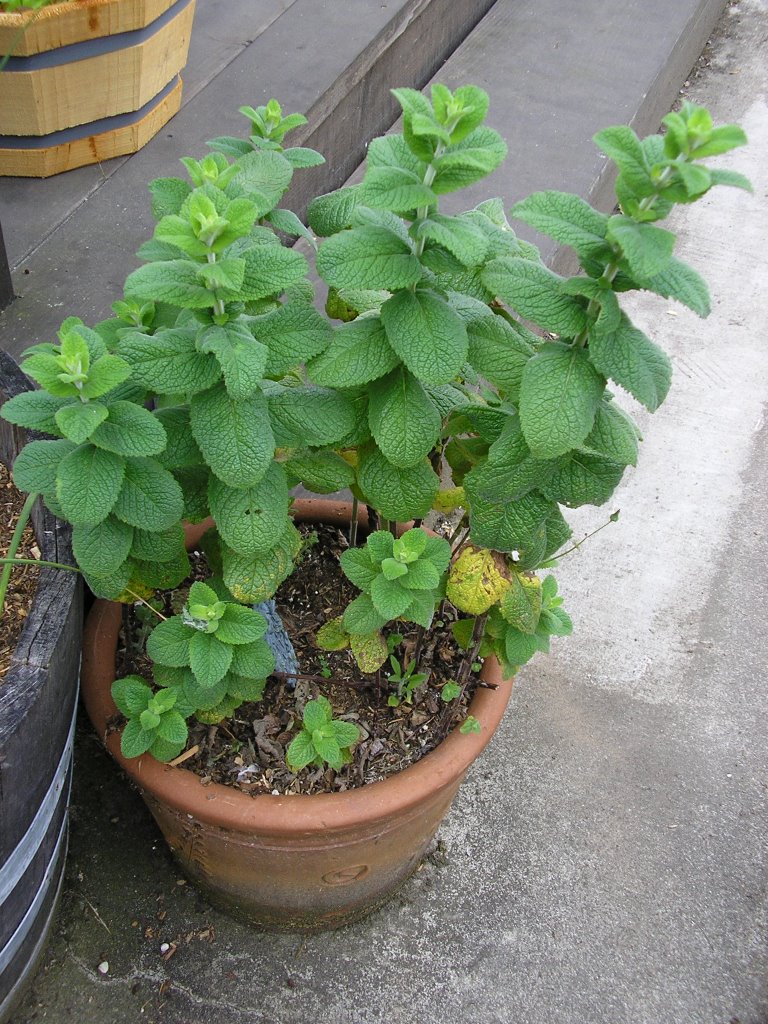
The only herbs I've planted so far are mint and lavender. The mint was planted last year and is doing great. I planted three lavender plants six weeks ago and although all three are growing at different rates, I think they'll all do fine.
Lettuces and Greens
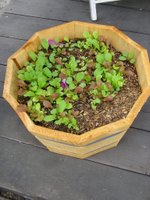
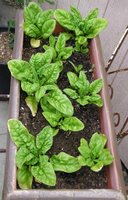
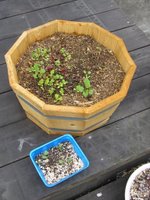
Two wood pots of mesclun lettuces are sprouting away and I think I'll be able to start harvesting in a few weeks. The spinach I planted in a container is doing great, while the spinach starts I transplanted to the compost bed withered and died. (I've come to the conclusion that the compost I had delivered may have included a heavy proportion of pine needles and chips and therefore may be rather acidic.) I've also started a few cabbages from seed, which I will transplant to pots when they're a bit bigger. One of the great things about having these in pots is that I can keep the lettuces cool under the pergola on the deck and out of the path of nibbling pests.
Beans and Peppers
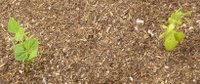
I have two Roma bean plants that I started from seed and two Bell pepper plants I bought that are currently in the compost bed--and looking rather sickly. Again, I think this compost is just too acidic, so they're going to get transferred to pots. Hopefully, they'll perk up. I also want to start more of the Roma beans--I hope to get enough beans to freeze and I know that two plants won't produce that much.

 Carrots, Corn, and Potatoes
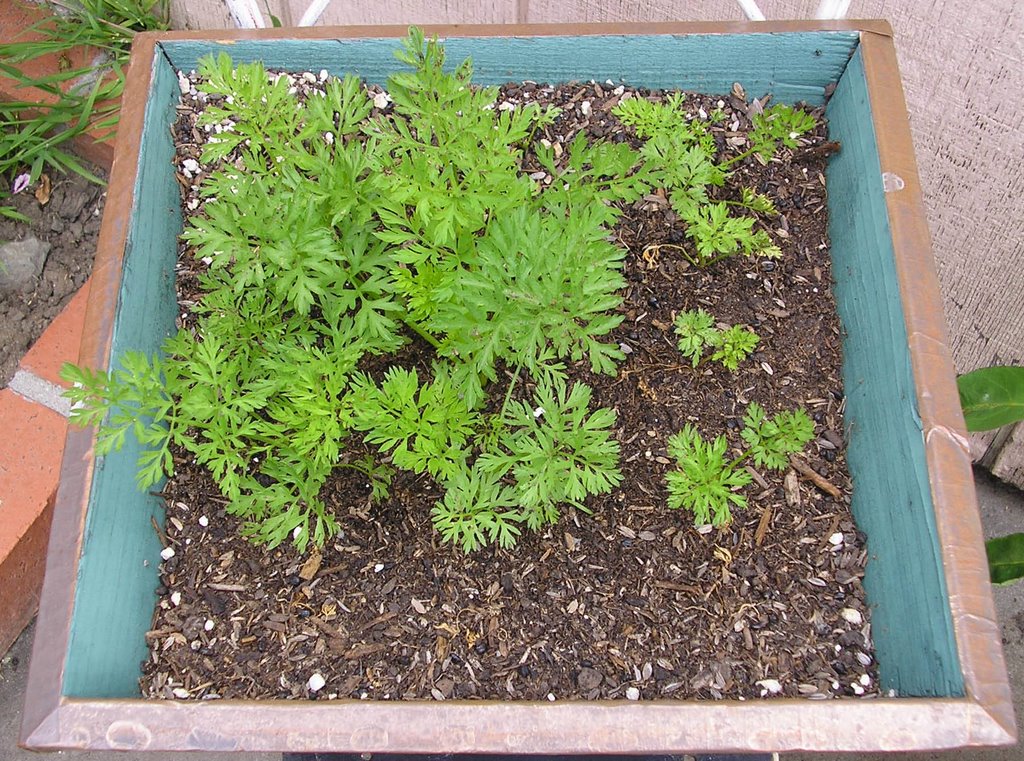
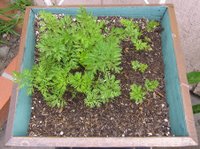
The Romeo carrots I planted from seed in a container are doing well. I'm not sure when they'll be ready to harvest, but they're definitely growing. 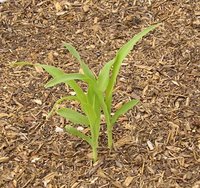
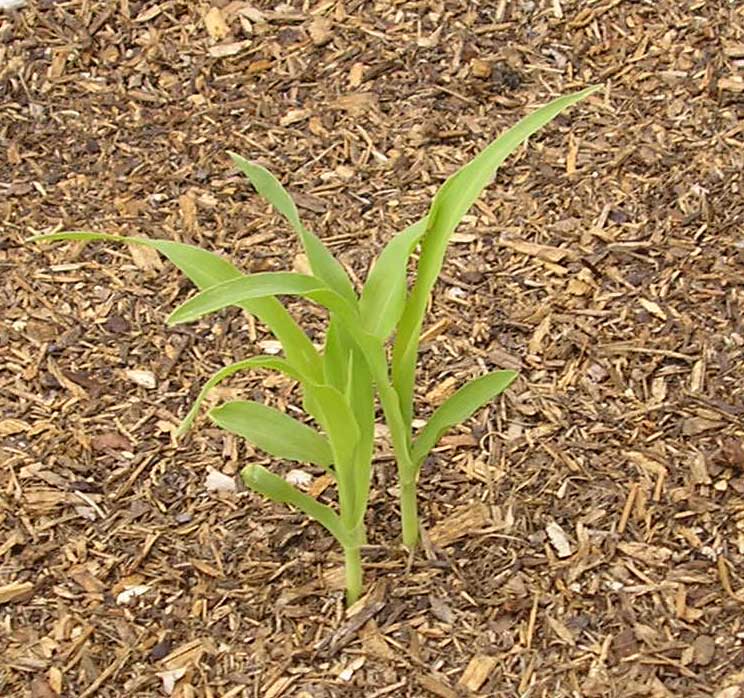
I've also found one thing at least that is happy to be in the compost bed--corn. I planted seeds a couple weeks ago and they're already a few inches high. After I take out the beans, peppers, and berry plant, I'm going to replant that bed with more corn, plus I'm going to build one more compost bed and seed that with corn as well.
I also took a chance with some baby dutch yellow potatoes that I bought at Trader Joe's and planted some of them in the compost bed as well. They should be OK with the acidic compost, and although I know it's recommended that you only plant certified seed potatoes and not the potatoes you buy in the grocery store, these potatoes were so delicious I thought I'd just give it a try. So far, nothing's sprouted, but I'm hopeful.
Conclusions
I know the extremely small scale of my farming efforts may be laughable to some, but I think things are working better this way than in past years when I've planted fewer types of vegetables, but more plants and gotten bumper crops that were hard to keep up with. Given my small gardening space and the fact that I'm a one-person household, I think I'll do better with smaller, rotating crops and an effort to keep something edible growing year-round. I've learned some tips from other blogs, especially The Path to Freedom Journal, that with the right techniques (container and vertical gardening, in particular), it's possible to get a good output no matter how big your gardening space is.